

2026-06-11
Off-Grid Container Homes: A More Intelligent Approach to Living with Enhanced Freedom
For many individuals, the allure of off-grid living isn't about complete disconnection, but rather about gaining greater autonomy.
This autonomy extends to your choice of residence.
It includes reduced reliance on public utilities.
It encompasses more control over your life, personal space, and future adaptability.
This very reason is why off-grid container homes are emerging as such a compelling choice.
While conventional houses can certainly be modified for off-grid functionality, this process is frequently costly, intricate, and takes considerably longer than anticipated.
Container homes fundamentally alter this perspective.
By virtue of their inherent efficiency, quicker deployment, and straightforward adaptation for self-sufficient living arrangements, they present a more attainable pathway for purchasers seeking alternatives to conventional housing models.
Should you still be exploring the broader context, our comprehensive guide on expandable container homes details the factors contributing to this segment's rapid expansion.
What Constitutes an Off-Grid Container Home?
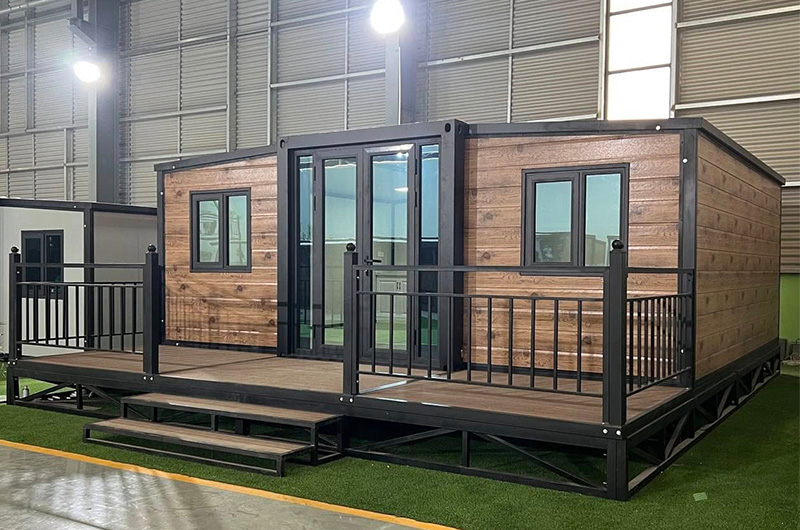
An off-grid container home is precisely as its name implies: a dwelling constructed from shipping containers, engineered to operate independently of conventional utility networks.
This typically signifies functioning without direct connections to standard municipal services, such as:
Centralized electrical power
Public water supplies
Municipal sewage systems
Conventional utility dependencies
Instead, homeowners often establish self-sustaining systems by integrating various components, including:
Photovoltaic (solar) power generation
Battery backup storage
Propane-based systems
Dedicated water tanks
Rainwater harvesting (where legally permitted)
On-site sewage treatment solutions
Composting facilities
Backup generator units
Container homes prove particularly well-suited for these applications due to their generally more compact and manageable footprint, which simplifies planning compared to adapting larger, traditional structures.
The Rationale Behind Container Homes for Off-Grid Living
Not all housing designs are equally practical for remote installations.
Container homes offer several distinct advantages.
Efficiency
Off-grid living inherently necessitates a mindful approach to resource consumption.
The management of heating, cooling, energy reserves, and water usage becomes critically important.
A structure that is inherently more efficient naturally alleviates the burden on these systems.
Expedited Deployment
Constructing in remote locations can present significant challenges.
Access for contractors, prevailing weather conditions, material availability, and logistical complexities can all lead to substantial delays.
Container homes streamline a considerable portion of this process.
Rather than constructing entirely from raw materials on-site, a substantial part of the structure is completed prior to delivery.
If you are interested in the specifics of this process, our guide on setting up container homes provides a detailed walkthrough.
Versatility
Individuals looking to establish off-grid residences often have distinct objectives.
Some desire a weekend retreat.
Others aspire to full-time, independent living.
Still others may seek solutions for guest accommodation, eco-tourism facilities, or supplementary living quarters.
Container homes offer a level of adaptability that serves all these diverse scenarios effectively.
Prevalent Applications for Off-Grid Container Homes
The range of potential applications is far broader than commonly perceived.
Primary Residence for Remote Living
For individuals transitioning away from conventional suburban lifestyles, off-grid container homes can serve as a practical choice for a main dwelling.
The primary driving forces are often privacy, a simpler way of life, and self-sufficiency.
Seasonal or Vacation Properties
A significant number of purchasers seek a personal sanctuary, not necessarily a permanent relocation.
Remote mountain properties, desert retreats, forest cabins, and getaway concepts all align seamlessly with this application.
Airbnb and Hospitality Ventures
The trend of off-grid tourism is experiencing marked growth.
Travelers are increasingly seeking out:
Unique lodging experiences
"Glamping" style accommodations
Environmentally conscious dwellings
Remote escape destinations
If your strategy involves hospitality, our guide on utilizing container homes for Airbnb is a valuable resource.
Accommodations for Guests
Providing independent living quarters for guests on larger properties represents another strong potential use.
Emergency or Contingency Housing
Some individuals simply desire adaptable living infrastructure that can be readily deployed when required.
Are Expandable Container Homes Viable for Off-Grid Use?
Absolutely.
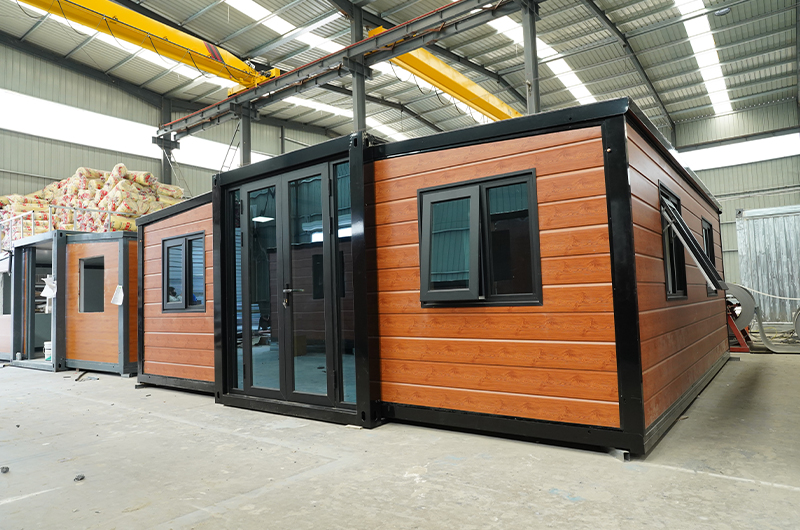
In fact, for a considerable number of prospective buyers, expandable container homes represent one of the most practical off-grid solutions. They adeptly combine ease of transport with a more comfortable and usable interior living space.
This additional space can make a substantial difference for those living in their homes full-time.
Rather than compromising comfort for the sake of independence, buyers can create living environments that feel significantly more accommodating and livable.
Key Considerations for Buyers
While the concept of off-grid living may sound straightforward in principle, meticulous planning is essential.
Energy Systems
This typically initiates the discussion.
Key questions include:
What is your anticipated power demand?
Will the usage be full-time or intermittent?
Will you rely solely on solar power?
What is your requirement for battery storage capacity?
Will a generator be necessary as backup?
Energy consumption can vary dramatically based on the types of appliances, heating, ventilation, and air conditioning (HVAC) systems utilized, as well as the local climate.
Water Accessibility
Potential solutions may include:
On-site storage tanks
Contracted water delivery services
Drilled wells
Rainwater collection systems (subject to local regulations)
The feasibility of each option is highly dependent on the specific location.
Waste Management
Commonly employed solutions include:
Septic systems
Composting toilets
Holding tanks, the choice of which depends on the specific usage scenario
Internet Connectivity
This has become a surprisingly critical element for remote living in the contemporary era.
Climate Adaptability
Diverse environmental conditions, such as scorching desert heat, harsh mountain winters, or humid coastal regions, each necessitate unique planning considerations.
Anticipating Costs for Off-Grid Setups
Transitioning to an off-grid lifestyle does not automatically equate to reduced expenses.
It frequently entails a shift in spending priorities.
Additional expenditures may encompass:
Solar power installations
Battery banks
Backup generators
Septic system installations
Water provisioning systems
Site preparation work
Logistics for delivery access
Therefore, a thorough understanding of the total project budget is paramount.
If you are in the process of assessing your total investment, our detailed guide on the costs associated with container homes offers further insights.
Modular Construction: A Key to Addressing the Worldwide Accommodation ShortfallP
Structural Integrity: Can Container Homes Withstand Storms and Snow?One of the m
Expandable Container Homes: The Future of Affordable, Flexible, and Modern Livin
Privacy PolicyEffective Date: June 2026We respect your privacy and are committed
10ft Double-Wing Expandable Container Home: The Next Generation of Modular Livin
+86 17563695938
contact@hshouse.com
No. 1099, Gongye 1st Street, Weicheng District, Weifang City, Shandong Province, China
View on Mobile
Copyright © 2026 Huisheng International Trade All rights reserved
powered by WDL
Send us your requirements. Free custom floor plan or 3D design in 3 working days
Submit form